
As I’m getting into different types of woodwork, one of the projects I wanted to tick off my list was a simple router bowl. I’ve seen plenty of YouTube videos of people making them, and I always liked the results.
There are two ways to do them. Well, there are lots of ways to do them but the bulk of it is either done by hand with a router, or with a CNC. I have both!
Of course, the CNC hasn’t been working for a long time. I was in the process of getting it working and then something went wrong and it drove the £50 bowl bit through a screw and ruined it. I stepped away from it for a bit, a bit being about 2 years whilst it became more of a shelf than a CNC. I had plenty of other projects to do so I figured I’d get back to it.
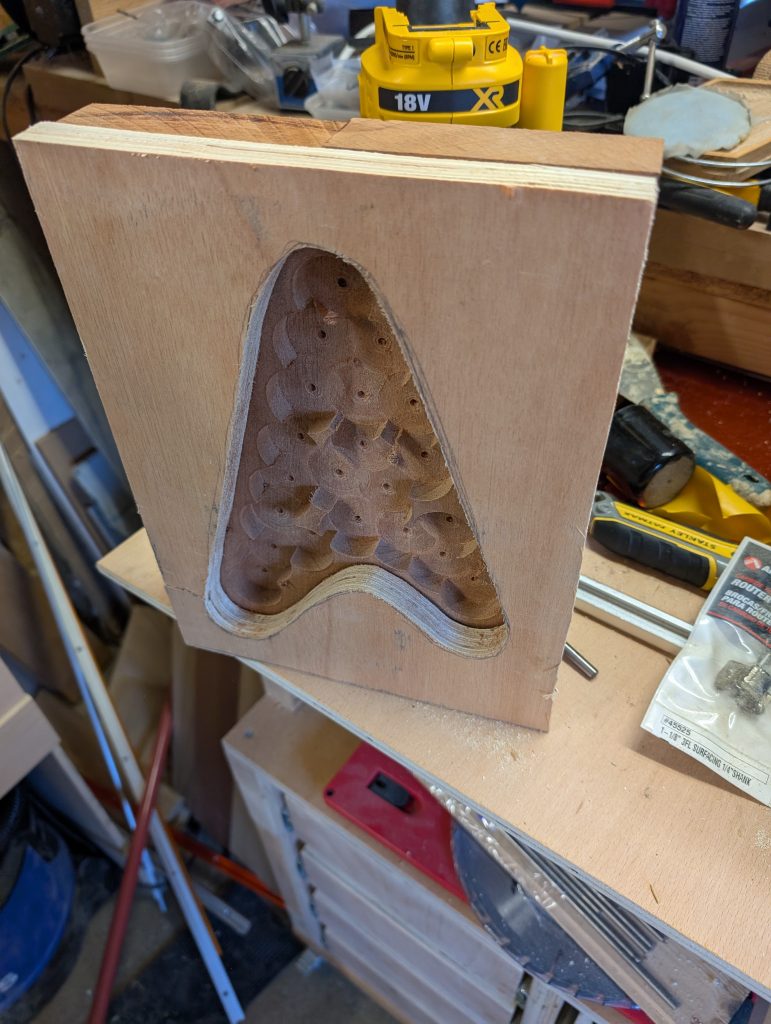
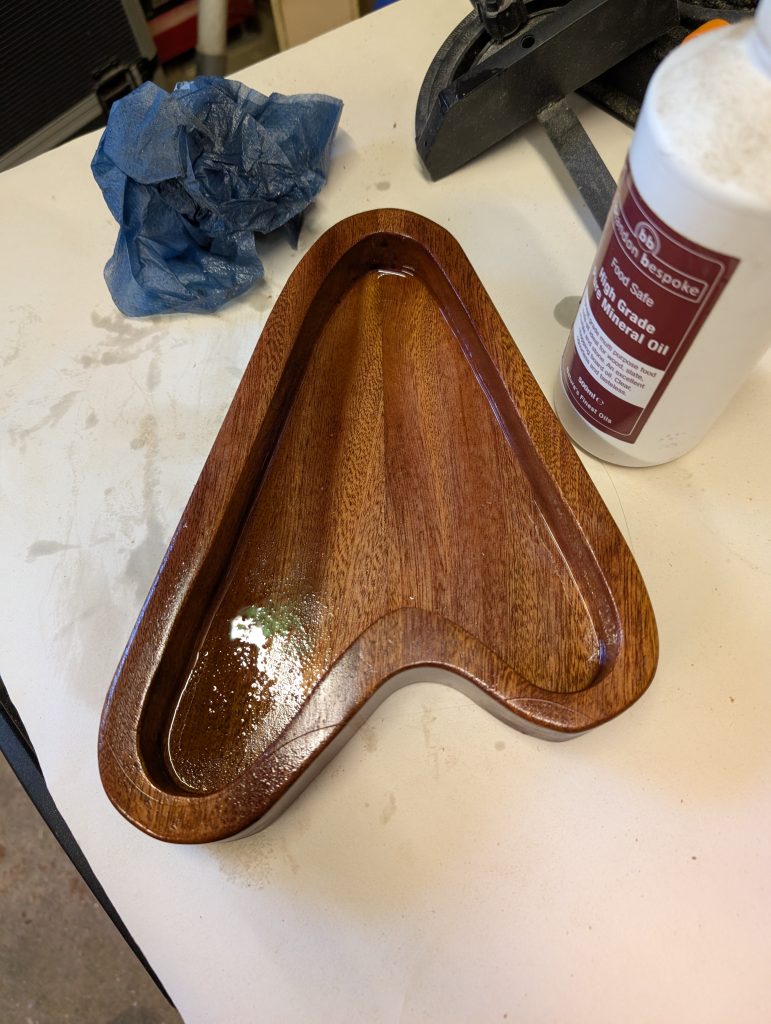
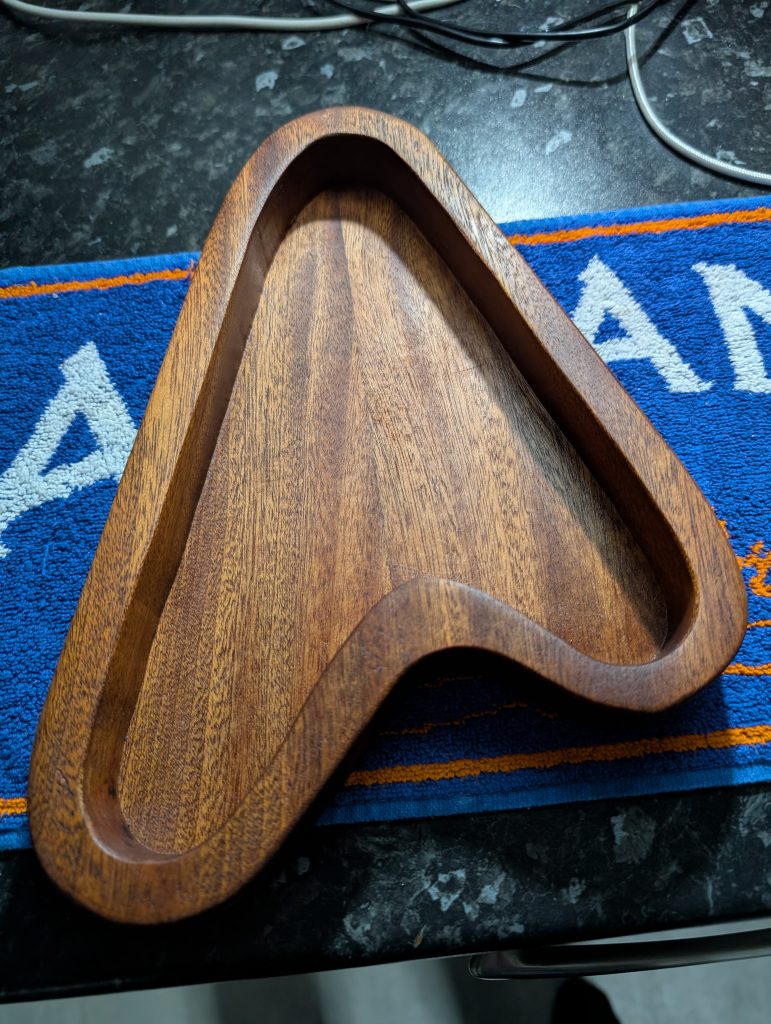
Before that tho, I did want to have a go at doing a more manual process of creating a router bowl. For this you usually use a template so I got to work making one. Being the geek that I am, it had to be different to any I’d seen before so I decided on the Star Trek logo as my inspiration. As this was my first attempt, I did it very roughly with some spare plywood that I had, a jigsaw, and my bench sander. It came out ok, tho it can definitely be improved on. Lets call it ‘rustic’.
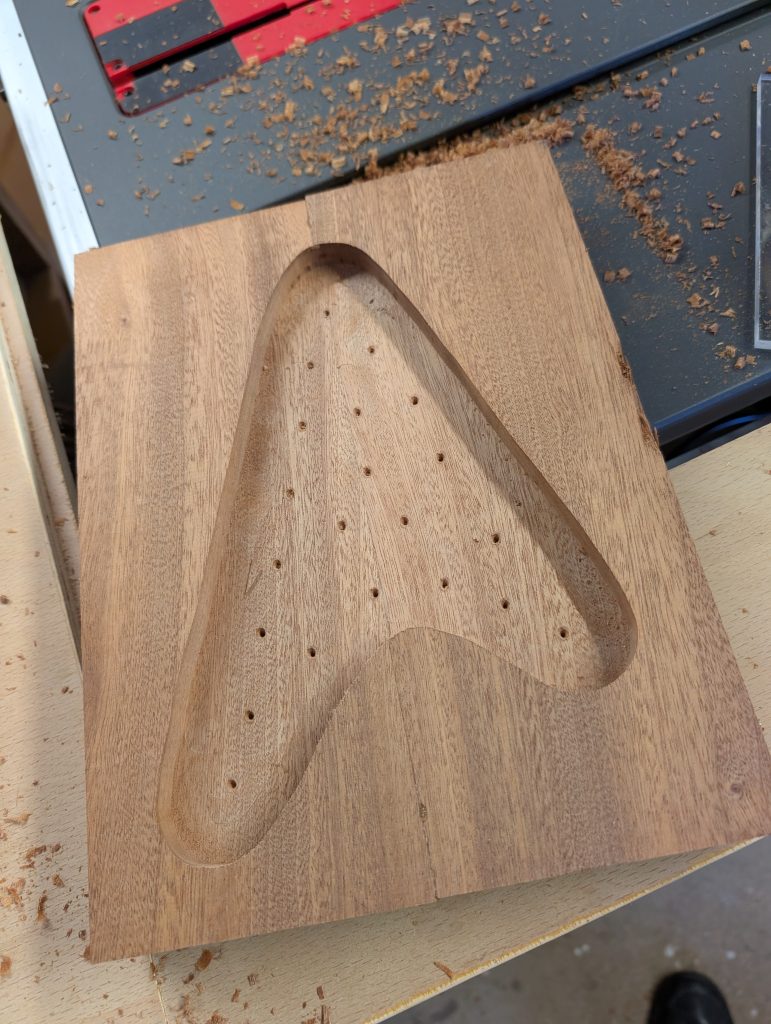
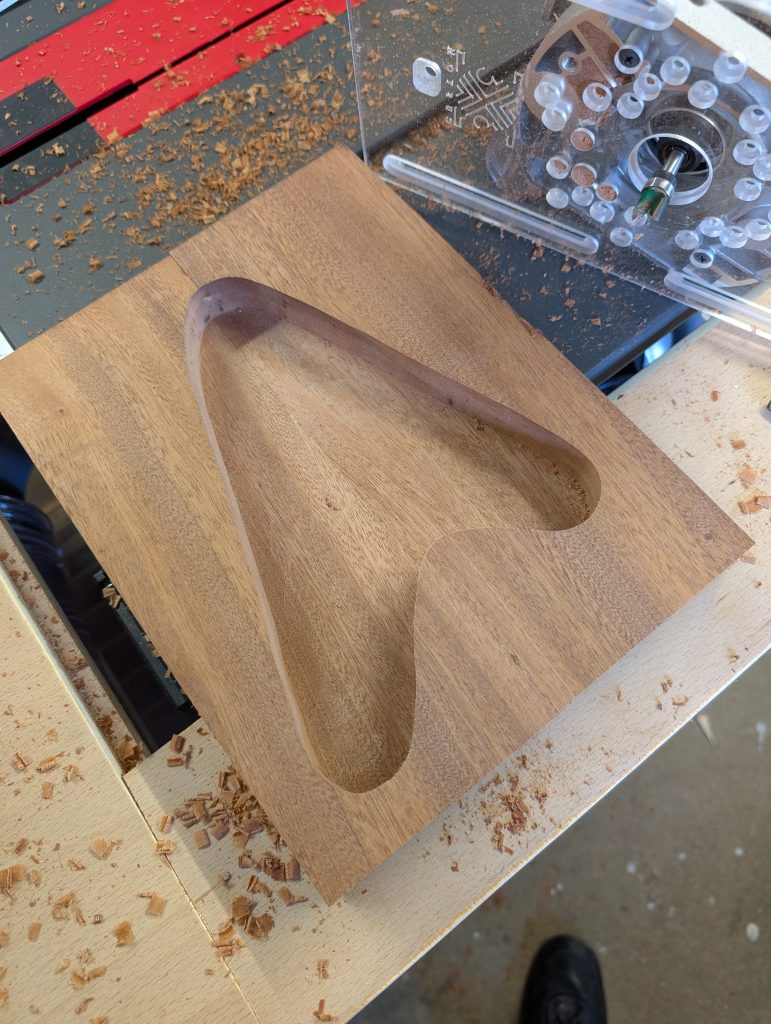
With the template made, I milled up some wood to make a blank and stuck it down with some double sided carpet tape. Next, rather than actually use a router on a router bowl I started hogging the majority of the material out with a forstner bit on my pillar drill, setting the depth stop to just above the finished depth I wanted. This made quick work of the material and I was quickly at the stage where I needed the router. With a wide plexiglass base on the router and a flush cut bit I got rid of the rest of the material and actually had something that kinda looked like a bowl!
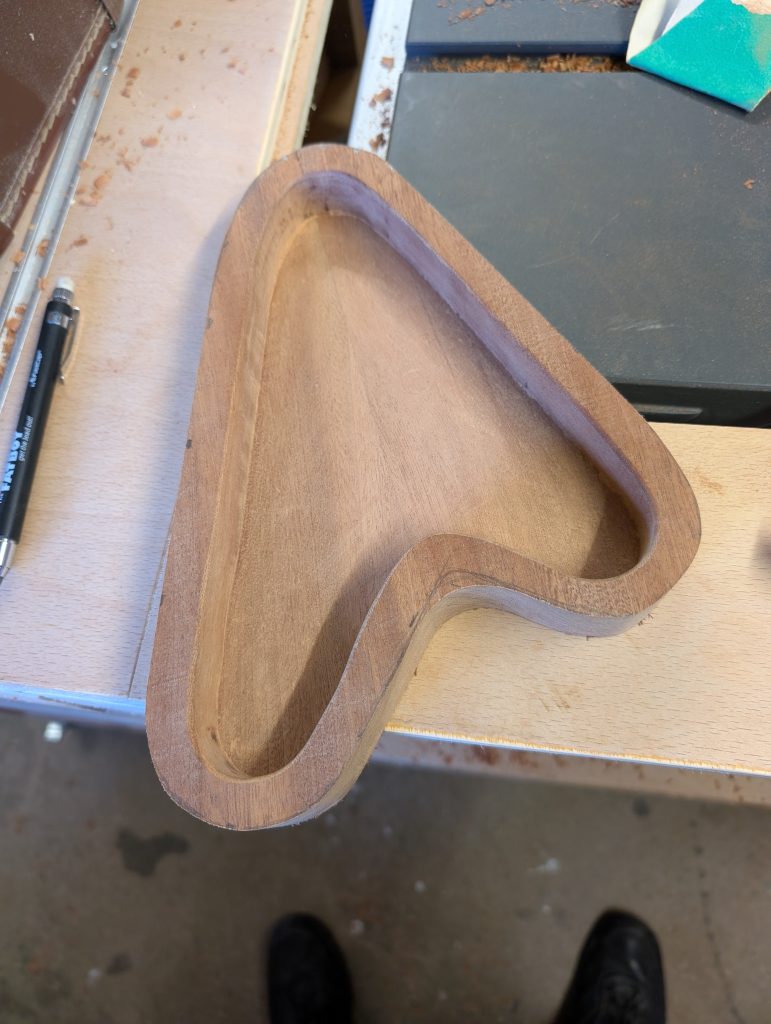
Next was the outside. I drew on a rough shape and went to the bandsaw to remove the majority of the extra wood. Very quick process, tho as it was all hand drawn and it was kinda an awkward shape, the width of the rim wasn’t really even. Remember… rustic! But anyway, I moved over to the bench sander to smooth off the outside and then did a lot of hand sanding to get the inside finished nicely. Once I was happy with it all I gave it a good few doses of mineral oil as a finish, to make sure it was food safe. Plus it was quick and easy, ideal for a test piece.
Overall I am quite happy with how it turned out. I should’ve gone for a simpler geometric shape to start with and it would’ve been a lot easier. The proportions for the whole thing were a little off too, I think the walls around the edge should’ve been a bit thinner. One thing I am planning on doing is to generate the templates in CAD and then I can 3d print them, possibly putting the STLs up on here for people to purchase if they want.
So with the manual process done, I spent a couple of weekends clearing all the junk off the CNC and trying to get it working again. Thankfully I could replicate the issue I’d had previously and managed to narrow down the cause to some speeds being set too high for the machine. I could probably do some work to speed it all up, but for now its working.
With that, I did a simple hexagonal bowl design in FreeCAD. I’m not the worlds best at CAD, and CAM (the part that translates the 3d model into code for the CNC) was really new to me. But after a few false starts and a fair bit of googling and watching YouTube, I got some gcode produced to run on the CNC.
I milled up another blank to work on, got it locked down on the machine, and let it go do its thing. With fairly conservative feeds and speeds (feed rate is the speed the bit moves, speed is the speed the bit spins at) it took about an hour and I came away with what I personally think is a fantastic result. I didn’t cut the whole way through the outside, deciding instead to leave about 5mm that I then cut on the bandsaw. With my router table I flush trimmed the left overs and also put a roundover on the bottom and rim. Then it was back to sanding, both with the bench sander and a fair amount of hand sanding. The finish for it was once again mineral oil seeing as I already had it out.
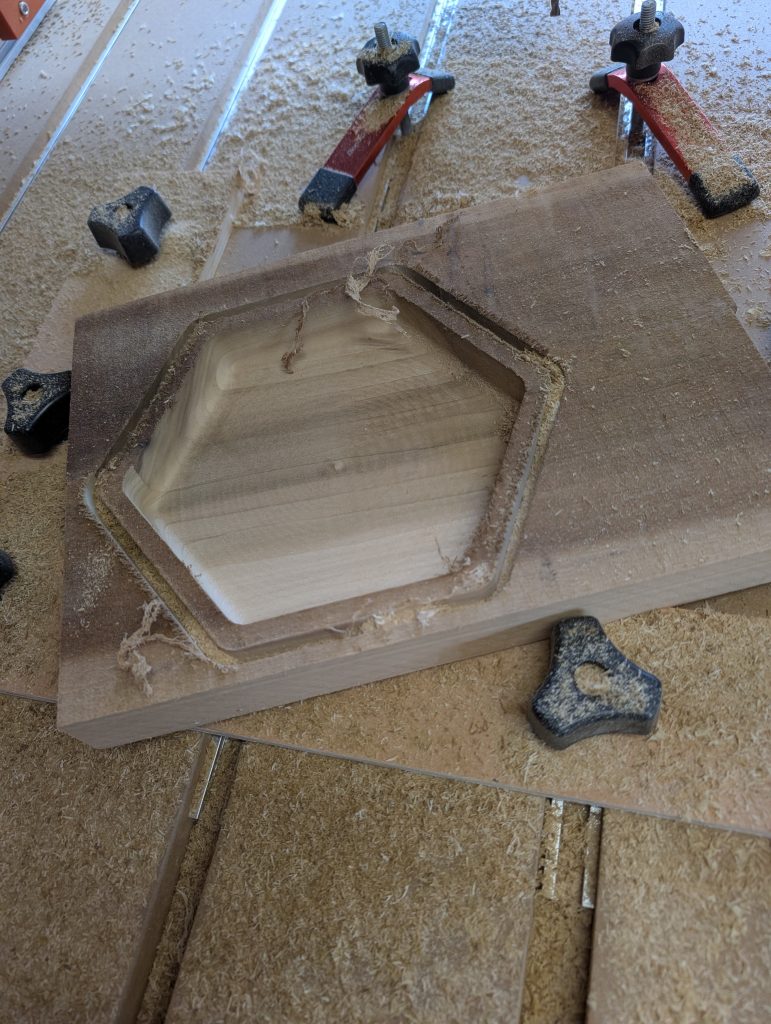
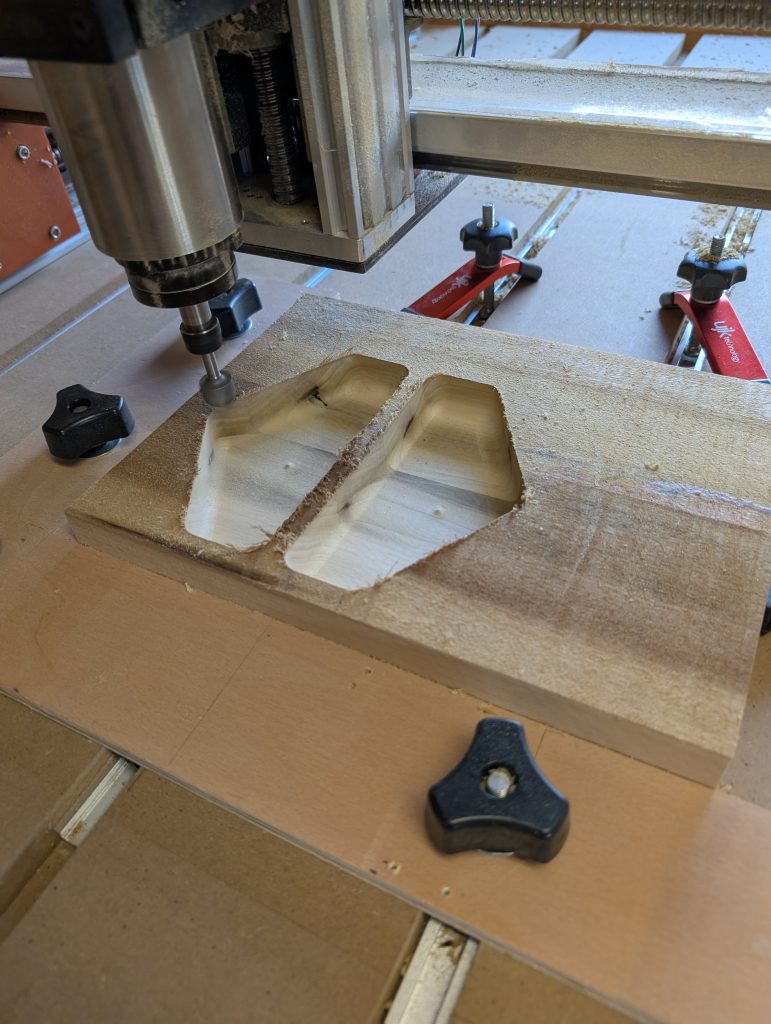
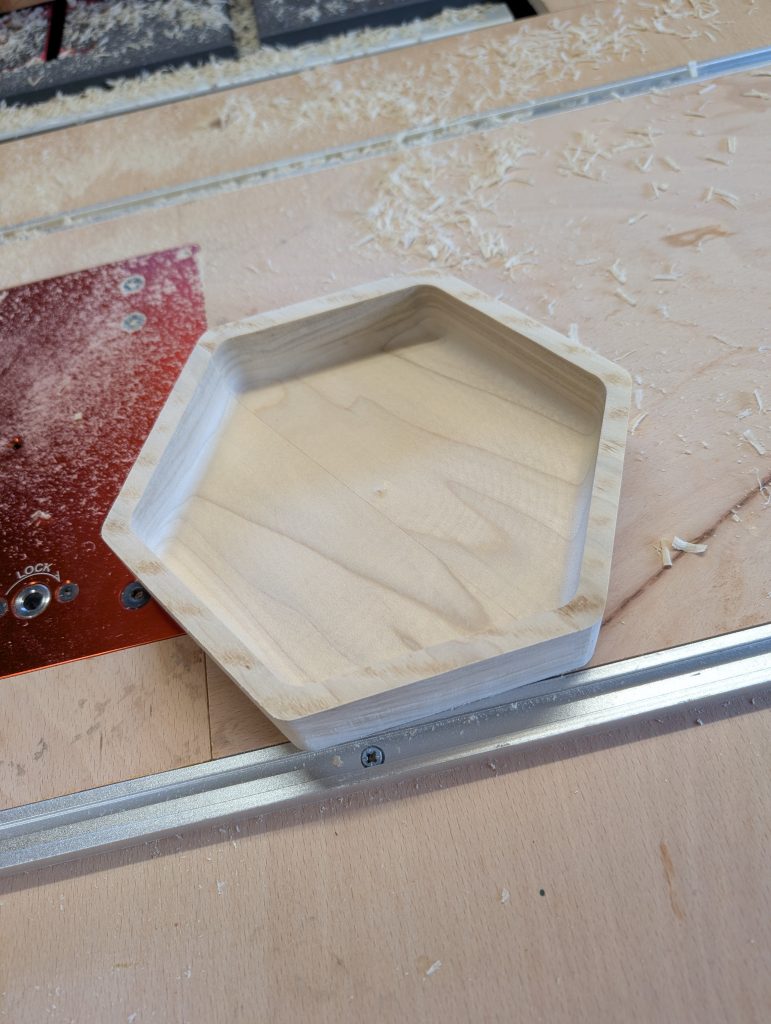
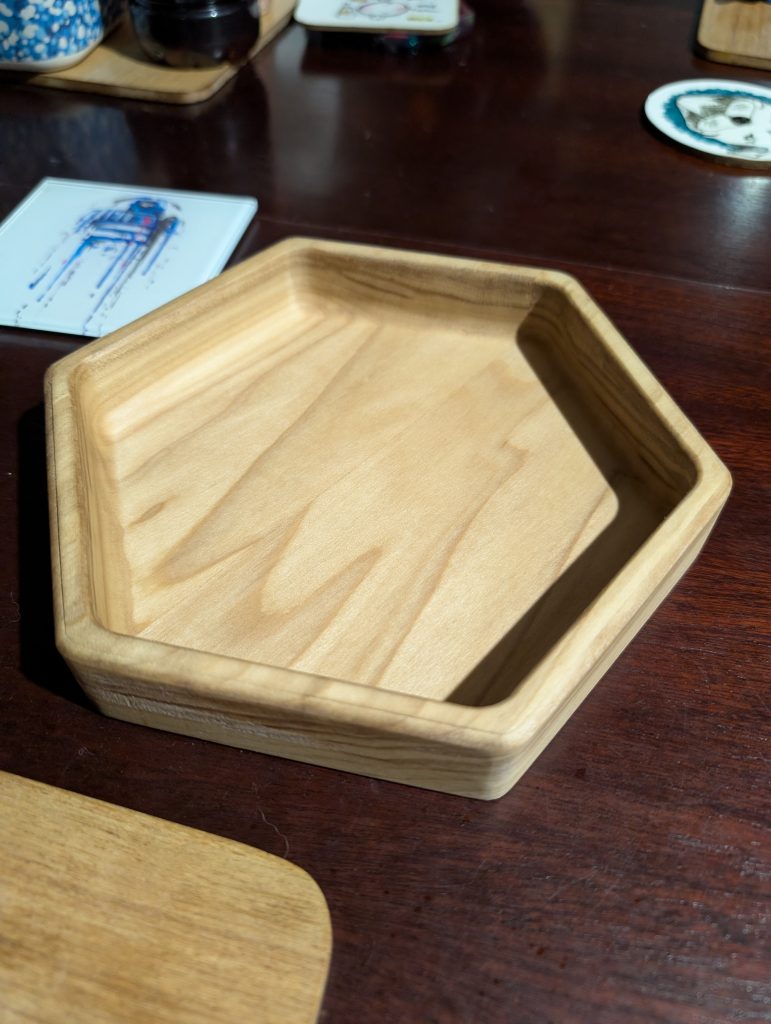
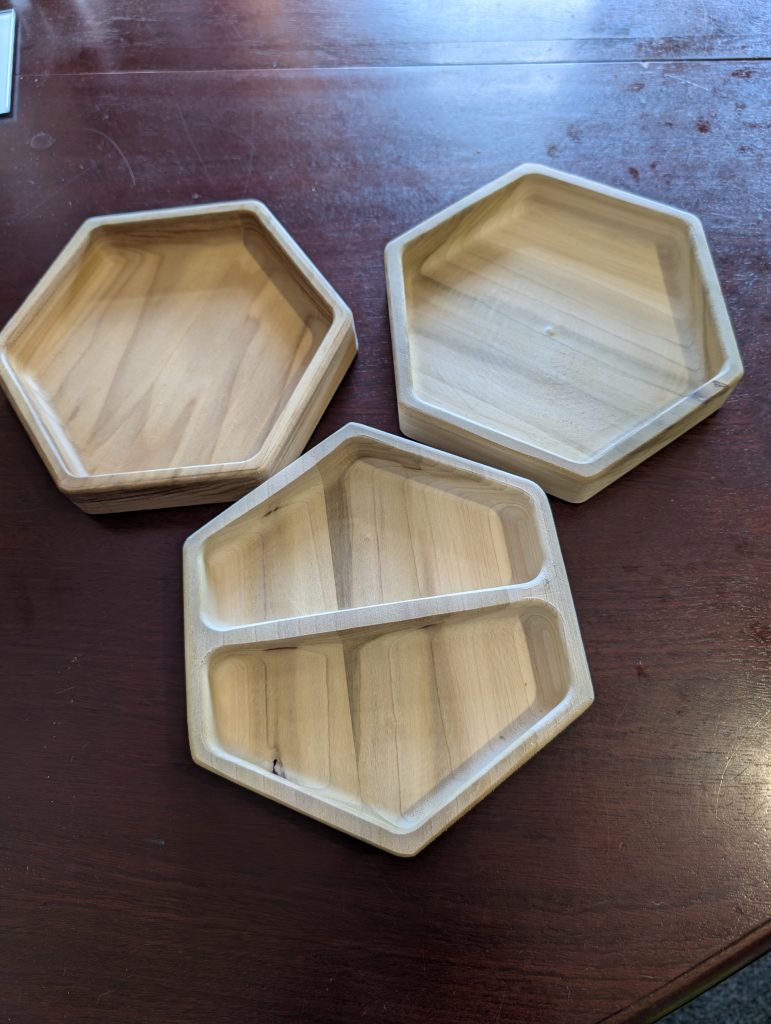
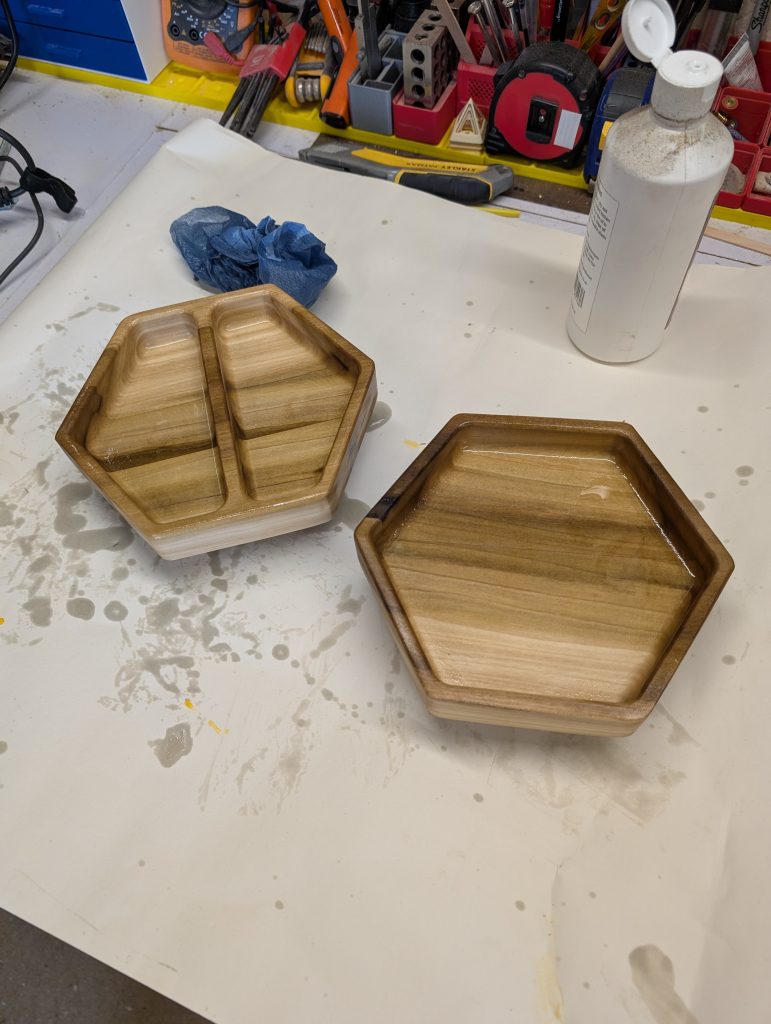
I’m not sure which I prefer really, the more hands on version was fun to do and if I have a decent template I think I can get really good results. But the CNC was much more accurate, plus the process of designing in cad and then having it all carved out of a chunk of wood for me was a great feeling. I’ve done lots of 3d printing over the years, but this felt different. So much so, the next weekend saw another identical bowl made, plus a segmented one that I *really* like.
I’m definitely going to be doing more CNC work, now that its working again I’ve a few ideas for things to make and want to try engraving text and other things like that. As for the templates to make ones the more ‘old fashioned’ way, I’d like to try again with the star trek logo with a more precise design.